


Student Team Training Resources
Module 2: The Jmol Training Guide
The Jmol Training Guide
JUDE (the Jmol User Design Environment) is a free web-based program that can be accessed through any internet browser window and can be used to generate fully interactive 3-dimensional models of molecular structures.
Learning how to manipulate the display of a protein structure with Jmol is a critical part of the Protein Modeling Event, allowing teams to create their Prebuild models and compete in the Onsite Computer Explorations of a Protein Structure.
For the Onsite Computer Explorations of a Protein Structure, students are required to bring a device with internet capability (laptop, Chromebook, tablet, or phone) to the event. The Event Supervisor will either provide Wi-Fi credentials to allow students to use their own devices on the local network or arrange for a computer lab with internet access and login information for each team in each event session.

Part 1 – Colors and Display Formats
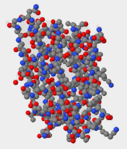
One of the most useful ways to explore a protein structure in Jmol, is by changing the colors and display formats used to represent the structure.
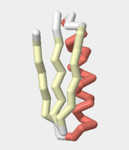
The select command allows for much more nuanced control of a protein structure in Jmol, allowing for different colors and display formats to be applied to a specific region of A structure.
Part 3 – Adding Sidechains and Ligands
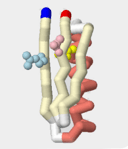
There is more to a protein structure than the path of the folded backbone. Jmol can be used to display specific key sidechains and ligands in a protein structure.
